


What is a disciple?
The Greek word commonly translated as "disciple" in the New Testament is μαθητής (mathētēs). For context, μαθητής means learner, student, or apprentice. To be a disciple, in the Greco-Roman (and Jewish) sense, you would attach yourself to a teacher to learn from them (how they thought), imitate their way of living, take on their worldview as your own, and ultimately become their legacy to pass on their teachings and ways to other generations. The word "disciple" is used over 250 times in Matthew, Mark, Luke, John, and Acts, which means it is not only important to the Christian faith, but it also defines how we experience it.
Gregory of Nazianzus wrote in the fourth century,
Discussion of theology is not for everyone. I tell you, not for everyone—it is no such inexpensive or effortless pursuit. Nor, I would add, is it for every occasion, or every audience; neither are all its aspects open to inquiry. It must be reserved for certain occasions, for certain audiences, and certain limits must be observed. It is not for all people, but only for those who have been tested and have found a sound footing in study, and, more importantly, have undergone, or at the very least are undergoing, purification of body and soul. For one who is not pure to lay hold of pure things is dangerous, just as it is for weak eyes to look at the sun’s brightness.1
Gregory wrote this to confront approaching theology as theory and instead taught that theology is about who you are becoming (or discipleship).
He isn’t saying the gospel is for some and not all—Gregory was a fierce defender of the totality of the gospel’s work; he is saying that depth in knowing God is reserved for those able to receive it by, as he puts it, undergoing purification of body and soul.
Discipleship is choosing to become an apprentice of Jesus, imitating his way of living, learning from him, taking on his worldview, and becoming his legacy, passing on his teachings and ways to the next generation.
As I wrote in a previous article, the contemporary tendency has been to emphasize individual salvation, whereas we should emphasize discipleship. So many Christians have made a decision of belief, but so few have made the decision to become a disciple of Christ. The irony is, Christianity is not, in its original sense, a religion. It has become a religion with its own doctrines and beliefs to define the tenets of our community as the historical Church, but it was not founded as a religion.
In fact, the first time we see the label “Christian” appear is in Acts 11 in the city of Antioch, modern-day Turkey, near the Syrian border. Disciples of Jesus were scattered throughout the region due to persecution that broke out after the stoning of Stephen (in Acts 7).2 Cyprus and Cyrene, among others, proclaimed the gospel of Jesus Christ to the Hellenists (or Greeks), and a great number believed and, as verse 21 says, “turned to the Lord”—language of discipleship.
Verse 26 says, “So it was that for an entire year they (Barnabas and Saul) met with the church and taught a great many people, and it was in Antioch that the disciples were first called ‘Christians.’” Note that “Christian” is the label given to disciples. Meaning, they are disciples before receiving the external designation of Christian.
There is actually historical evidence that “Christian” was used derogatorily in Acts 11, indicating that outsiders in Antioch saw this group as distinguished from other forms of Judaism. Nevertheless, the point remains that Christian was never the internal identification of followers of Jesus; disciple was.
While the term disciple is used over 250 times in Matthew, Mark, Luke, John, and Acts, the term Christian is used only twice, both in Acts,3 and never in Matthew, Mark, Luke, or John. Again, this indicates the early Church was not striving for sheer belief, but for discipleship, which belief serves as a means to. To truly believe, for the New Testament Church, was to follow. Without following as a disciple, did one ever, truly, believe?
For redundancy yet clarity, I must reiterate that discipleship is not what defines the finished work of Christ. The gospel is that Christ finished sin, death, and the grave as and for his entire Creation, eternally. Discipleship is what we do with that.
We can define modern discipleship in the same way the ancients defined μαθητής (mathētēs):
Attaching (joining) yourself to a teacher to learn how they think.
Imitating your teacher’s way of living.
Taking on your teacher’s worldview as your own.
Becoming your teacher’s legacy, passing down their teachings and ways to other generations.
The teacher is Jesus. Jesus is referred to as “teacher” or “Rabbi” over 60 times in the gospels. All who join themselves to Jesus, as disciples, are called to mimic his ways (Paul, in Ephesians 5:1, says we are to be imitators of God), to take on his worldview, and to pass it down to future generations. Which means the purpose of the Church, the community of disciples, is in essence to pass down this legacy to others.
But before we speculate about the tangibility of the Church functioning within the scope of authentic discipleship, we must explore how we ourselves are to step fully into our own calls to be disciples of Jesus.
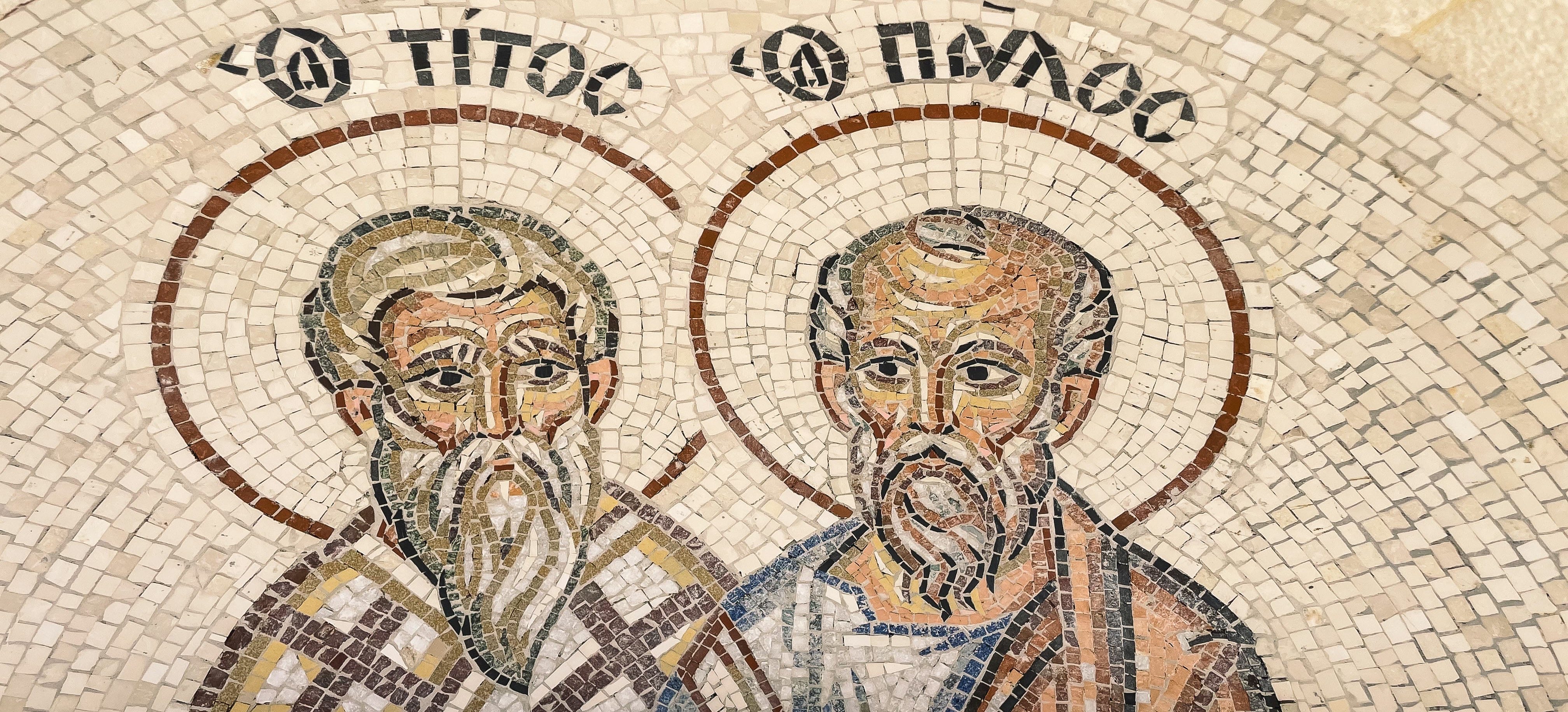
Comprehending the love of God
Paul, in Ephesians 3:14-21, writes:
14 For this reason I bow my knees before the Father, 15 from whom every family in heaven and on earth takes its name. 16 I pray that, according to the riches of his glory, he may grant that you may be strengthened in your inner being with power through his Spirit, 17 and that Christ may dwell in your hearts through faith, as you are being rooted and grounded in love. 18 I pray that you may have the power to comprehend, with all the saints, what is the breadth and length and height and depth, 19 and to know the love of Christ that surpasses knowledge, so that you may be filled with all the fullness of God.
20 Now to him who by the power at work within us is able to accomplish abundantly far more than all we can ask or imagine, 21 to him be glory in the church and in Christ Jesus to all generations, for ever and ever. Amen.4
Verses 20-21 are called a “doxology,” a liturgical praise to God (similar to a song we might consistently sing or a common phrase we might cling to as a community), and it is set within the context of Paul’s prayer to the gentile church. His prayer is that the church, empowered by the Spirit as a dwelling for Christ, have the power to know and comprehend the breadth, length, height, and depth of the love of Christ that surpasses all knowledge, so that we may be filled with all the fullness of God.
Pause…
His love “surpasses all knowledge,” yet Paul is praying that we be empowered to “know” and “comprehend” it. The root Greek word for “know” is γινώσκω (ginōskō) and means to know, understand, and be assured of. The root Greek word used for comprehend is καταλαμβάνω (katalambanō) and means to lay hold of, grasp, obtain, attain, or even seize.
Isn’t it impossible to know what is unknowable? The love of God is a love that, according to Paul, surpasses the ability to comprehend it. It is unfathomable. And yet, his prayer is that we both know and comprehend it—that we understand it and lay hold of it.
Meaning, as disciples of Jesus, there must be a way for us to know what is otherwise unknowable. Enter the doxology of verses 20-21.
20 Now to him who by the power at work within us is able to accomplish abundantly far more than all we can ask or imagine, 21 to him be glory in the church and in Christ Jesus to all generations, for ever and ever. Amen.
He is able to do far more than we can ask or imagine, which, in context, is to know the love of God. God reveals his love to us, for us to know it, experience it, lay hold of it, and share it with others. Which means, apart from God’s work, we are unable to grasp the magnitude of the love of God.
More clearly, without discipleship, where we cling to our teacher (Jesus Christ, empowered and sealed by the Spirit, revealing the Father) and learn his ways (love), we cannot grasp the breadth of the love of God and, therefore, can’t fully grasp the gospel, which is the revelation of the love of God.
Herein lies the heart of discipleship. It’s not that the love of God isn’t there for everyone and everything in Creation; it’s that to experience it—to know it—requires the work of God within us. And God does this work in us when we tether our lives to his, in the Son.
Furthermore, it’s not just knowing love as an emotion or principle; 1 John 4:8 teaches us that God is love. To know love is to know God, and to know God is to know love. As disciples, by following and learning from Jesus, we are learning the love that surpasses all understanding, because that love is God himself.
The hidden irony of our day is that we emphasize belief because it’s an easier entry into the gospel than the call to discipleship. Belief costs nothing; discipleship costs everything. However, the only way to truly know the gospel, which is to know love, is to know God. And, the only way to know God as he desires to be known is by choosing to join our lives to Christ as apprentices (another word for disciple) to his life and way; to see the world as he sees it, and to lay down our lives as he laid down his.
As we follow him in his ways, we will start to comprehend, little by little, this love which adopted us from the foundations of the earth (Ephesians 1:4). And in comprehending, we will be “filled with all the fullness of God,” as Paul writes in verse 19 above. That language is the language of discipleship. Similar to Elisha picking up the mantle and being filled with a double portion of his teacher Elijah’s anointing (2 Kings 2), so are we filled with the anointing and fullness of our teacher, Jesus Christ, the Son.
A community of disciples, passing down a legacy
I mentioned it earlier, but the purpose of the Church, the community of disciples, is to pass on the legacy of our teacher to others. What is the best way to draw others to follow the one we’ve laid down our lives to follow? For others to see in us what we see in him (Jesus).
In 1 Corinthians 11:1, Paul tells the church of Corinth to “be imitators of me, as I am of Christ.” I’m curious if this has been the call of evangelism all along. If we, the Church, can learn to follow Jesus as disciples, the world will see Jesus in us.
Gregory later writes in Oration 30:
“God will be all in all” when we are no longer what we are now, a multiplicity of impulses and emotions, with little or nothing of God in us, but are fully like God, with room for God and God alone. This is the “maturity” towards which we speed. Paul himself is a special witness here… “Where there is neither Greek nor Jew, circumcision nor uncircumcision, Barbarian, Scythian, bond nor free; but Christ is all in all.”5
The answer to so much strife and inconsistency in our day is what it has always been: a simple yes to follow.
St. Gregory of Nazianzus, On God and Christ: The Five Theological Orations and Two Letters to Cledonius, St. Vladimir’s Seminary Press “Popular Patristics” Series (St. Vladimir’s Seminary Press, 2002), p. 27.
See Acts 8:1 on the persecution and scattering after Stephen’s death.
Acts 11:26 and Acts 26:28 both use the term in a more derogatory sense.
From the NRSV.
St. Gregory of Nazianzus, On God and Christ, p. 98.
新约中“门徒”远比“基督徒”更常出现,这很有趣,它提醒我们,基督徒身份从来不只是接受一套教义,而是被基督呼召,进入祂的生命,学习祂的道路,效法祂的样式。这一点让我想到潘霍华《门徒的代价》中的提醒。他所批判的“廉价恩典”,本质上也是一种脱离跟随的信仰:人想要基督的赦免,却不愿意接受基督的呼召;想要十字架带来的救恩,却不愿意走十字架的道路。在思考到“legacy”时,我也非常的同意,门徒确实被呼召去传递基督的教导和生命,但门徒训练的目标不能只是复制一种基督徒文化、传统或属灵模式。历史已经告诉我们,一个群体可以拥有神学院、教会制度、丰富的圣经知识,甚至拥有非常悠久的传统,却仍然可能失去对基督真实的跟随。
因此,真正的门徒传承不是复制一个体系,而是不断地把人带回基督自己。门徒不是继承一种文化,而是回应一个活的呼召:“来跟从我。”
这也让我想到最近读海德堡要理问答以及思考基督徒成圣的问题。基督既然已经完成救赎,为什么信徒仍然需要经历成圣、苦难,甚至肉体的死亡?答案或许就在于:救恩不仅是让我们脱离罪的刑罚,更是让我们进入基督的生命。正如保罗在罗马书6章所说:“我们若在他死的形状上与他联合,也要在他复活的形状上与他联合。”与基督联合,不只是得到一个赦罪的身份,更是进入祂的死与复活。因此,门徒道路不是在基督完成救恩之外增加的一种更高要求,而是基督救恩在人生命中真实展开的方式。
所以,真正的门徒训练不是让我们成为更像某一种基督徒,而是越来越像基督自己:与基督联合,跟随基督,经历十字架,分享基督的生命,并把这生命传递给下一代。最终,教会真正需要传承的,不只是关于基督的信息,而是基督自己。
How are disciples made?